
Zone 2 is often presented as if it were a precise secret number. For a beginner, it is more useful to think of it as comfortable aerobic work: an effort you can repeat, recover from and gradually build into a routine.
If you are new to walking or running, start with the broader walking and running for fitness guide and use this article to fine-tune how hard your easier sessions should feel.
What people mean by zone 2
Zone 2 is a common training label for a relatively easy aerobic intensity. Your breathing is working, but it is not rushed. You can keep moving for a while, and the effort feels controlled rather than like a test.
The exact heart-rate boundaries vary by person and by the method used to estimate them. Age-based formulas are only rough starting points, so a displayed zone should not override how you actually feel.

Use the talk test first
The simplest check is whether you can speak in short sentences while moving. If you can talk comfortably but would rather not give a long speech, you are probably near an easy-to-moderate aerobic effort. If you can only get out a few words, slow down.
This is not a pass-or-fail test. Heat, hills, stress, poor sleep and medication can all change how the same pace feels. Treat the talk test as a guide and adjust the pace to the day you are having.
Walking counts
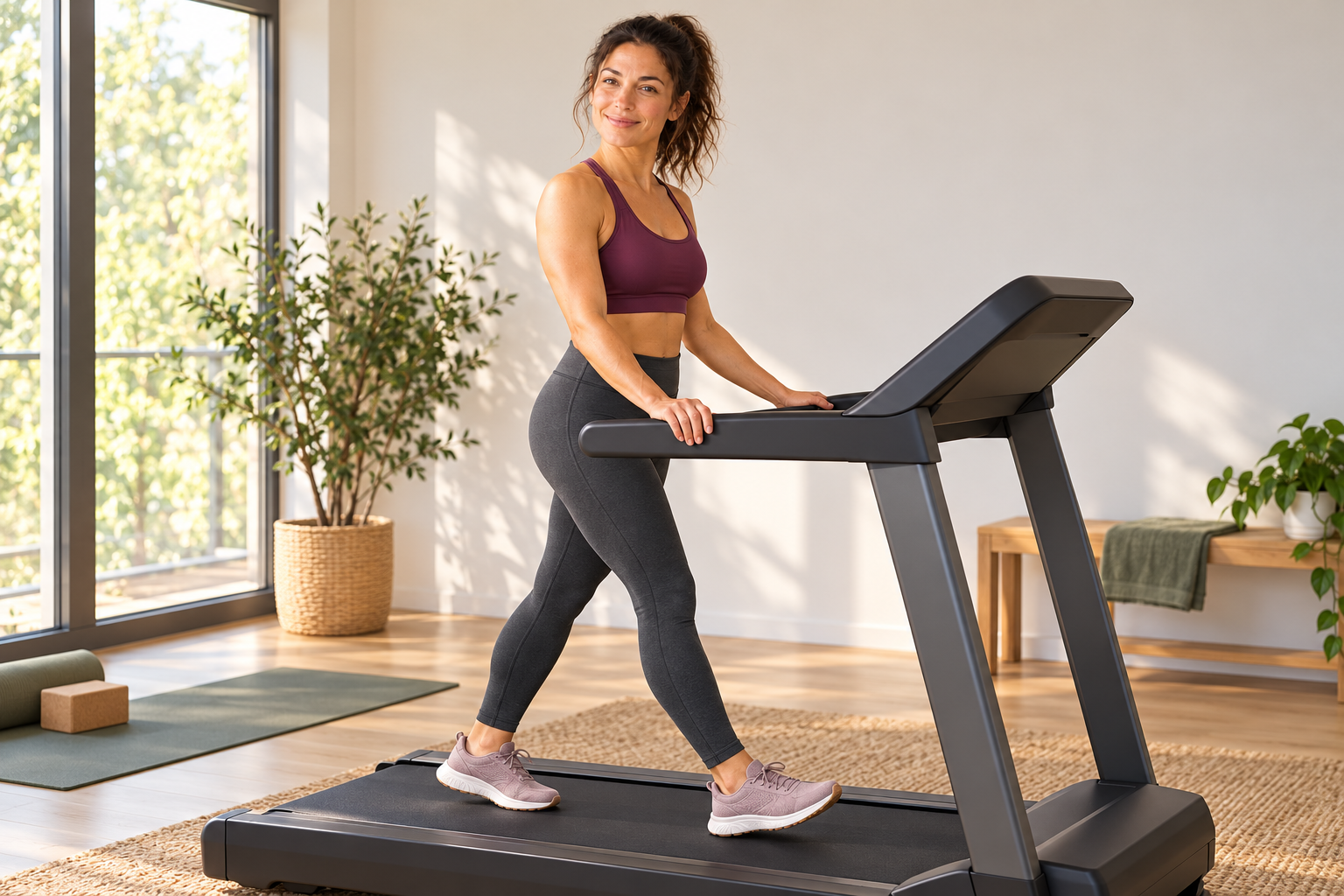
Zone 2 does not require running. Brisk walking, an easy treadmill incline or a relaxed bike ride can all work. The right choice is the one that lets you keep the effort steady without creating unnecessary joint impact or recovery debt.
For a first session, try 20 to 30 minutes at a pace where your breathing is noticeable but manageable. If that is too much, use shorter blocks with easy movement between them.
A simple weekly starting point
Try two or three sessions per week, leaving at least one easier day between harder or longer efforts:
- Start with 20 to 30 minutes of comfortable walking or another low-impact activity.
- Keep most of the session at a pace where the talk test still works.
- Add five minutes to one session only after the current duration feels repeatable.
- Keep one or two days for strength, mobility, rest or normal daily movement.
Do not turn every session into a test
The purpose of easy aerobic work is consistency. You do not need to finish breathless for the session to count. If you repeatedly push into hard breathing, the workout becomes a different type of training and may need more recovery.
Use a pace that leaves you feeling like you could have continued for a little longer. That makes it easier to return for the next session and build a habit across several weeks.
When to progress
Progress when the current plan feels comfortable for at least a couple of sessions and your recovery is normal. Change one thing at a time: duration, frequency, a small incline or a few gentle jog intervals. Do not increase everything in the same week.
If the effort suddenly feels much harder, keep the same plan or reduce it. A slower session is still useful when sleep, stress, illness or the weather changes your capacity.
Cool down and notice your response
Finish with a few minutes of easy walking rather than stopping abruptly after a faster section. Notice your breathing, energy and any soreness over the next day. Persistent pain, chest pressure, faintness or unusual shortness of breath is a reason to stop and seek appropriate medical advice.

Frequently asked questions
Is zone 2 the same for everyone?
No. Fitness level, age, health, medication, terrain and conditions all affect the effort you can sustain. Use general zones as estimates, not as a reason to ignore symptoms or force a pace.
Can I combine zone 2 with strength training?
Yes. Keep the easier cardio genuinely easy and allow recovery between demanding sessions. A weekly plan that you can repeat is more useful than one that looks impressive for a single week.
What if I cannot talk while walking?
Slow down, choose a flatter route or use shorter intervals. Build from the level you can repeat comfortably rather than trying to match someone else’s pace.
Sources
- ODPHP: Physical Activity Guidelines for Americans
- American Heart Association: Target Heart Rates
- CDC: Measuring Physical Activity Intensity
This article is for general education and is not a diagnosis or a personalized training prescription. If you have a health condition, symptoms or questions about starting exercise, speak with a qualified health professional.
Common questions
Do I need a heart-rate monitor for zone 2 cardio?
No. A monitor can provide a reference, but the talk test and your perceived effort are useful starting points.
Can walking count as zone 2 cardio?
Yes. For many beginners, brisk walking is an effective way to build comfortable aerobic work.
How often should a beginner do zone 2 cardio?
Begin with two or three manageable sessions each week and adjust around your current fitness, recovery and schedule.
This article is for general information and isn’t a substitute for personal medical advice. If you have health concerns, speak to a qualified professional.