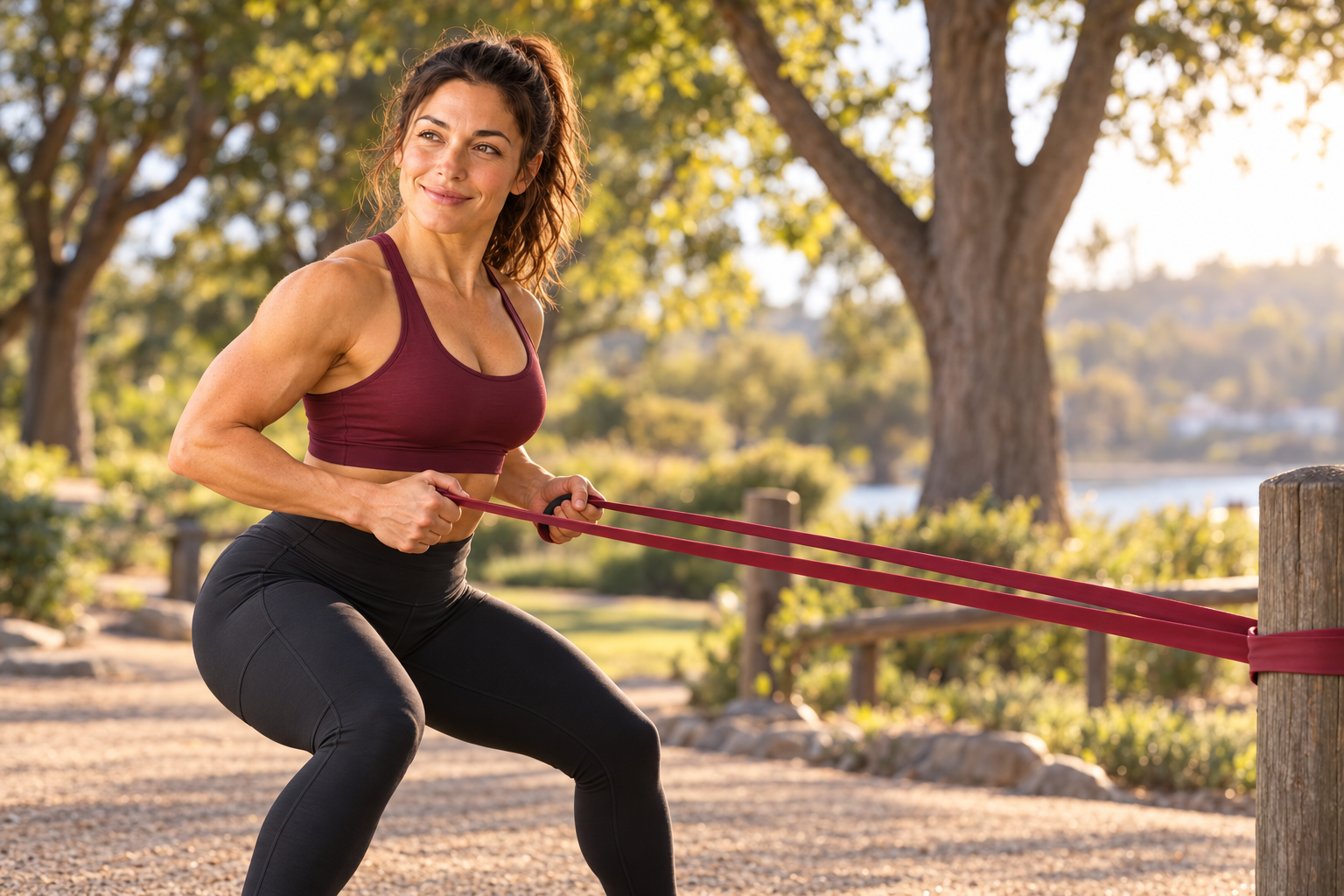
Strength training is for women. The basic principles are the same: choose a manageable resistance, practise useful movement patterns, and gradually ask a little more of yourself. You do not need a special version of every exercise, and you do not need to train around an imagined perfect body.
The useful questions are more personal: what feels comfortable, what can you recover from, what worries you, and what support will help you keep going?
This guide covers questions that often get left out of general beginner advice: the fear of becoming “too bulky,” menstrual-cycle claims, midlife context and feeling out of place in a gym. For the basics of starting strength training, see Strength Training for Beginners.
Will strength training make me bulky?
Usually, no. Building a large amount of muscle takes consistent training, recovery and often a deliberate effort to support muscle growth. A beginner who starts with two manageable sessions a week is more likely to notice better control, confidence and strength before any dramatic change in size.
The word “bulky” can hide several concerns: changing shape, gaining weight, looking unlike yourself, or losing the ability to choose how you train. Those concerns are valid, but they are not a reason to avoid strength work. You can choose the exercises, loads and pace that fit your goals.
Strength training can be about carrying shopping, getting up from the floor, feeling steadier on stairs or having more options in daily life. It does not have to be a body-transformation project.
Do women need a different strength-training programme?
Not for the basic movement patterns. A rounded beginner plan still needs some combination of squatting, hinging, pushing, pulling and carrying. The difference is the context you bring to the plan: previous training, symptoms, recovery, pregnancy or postpartum status, injuries and what you enjoy.
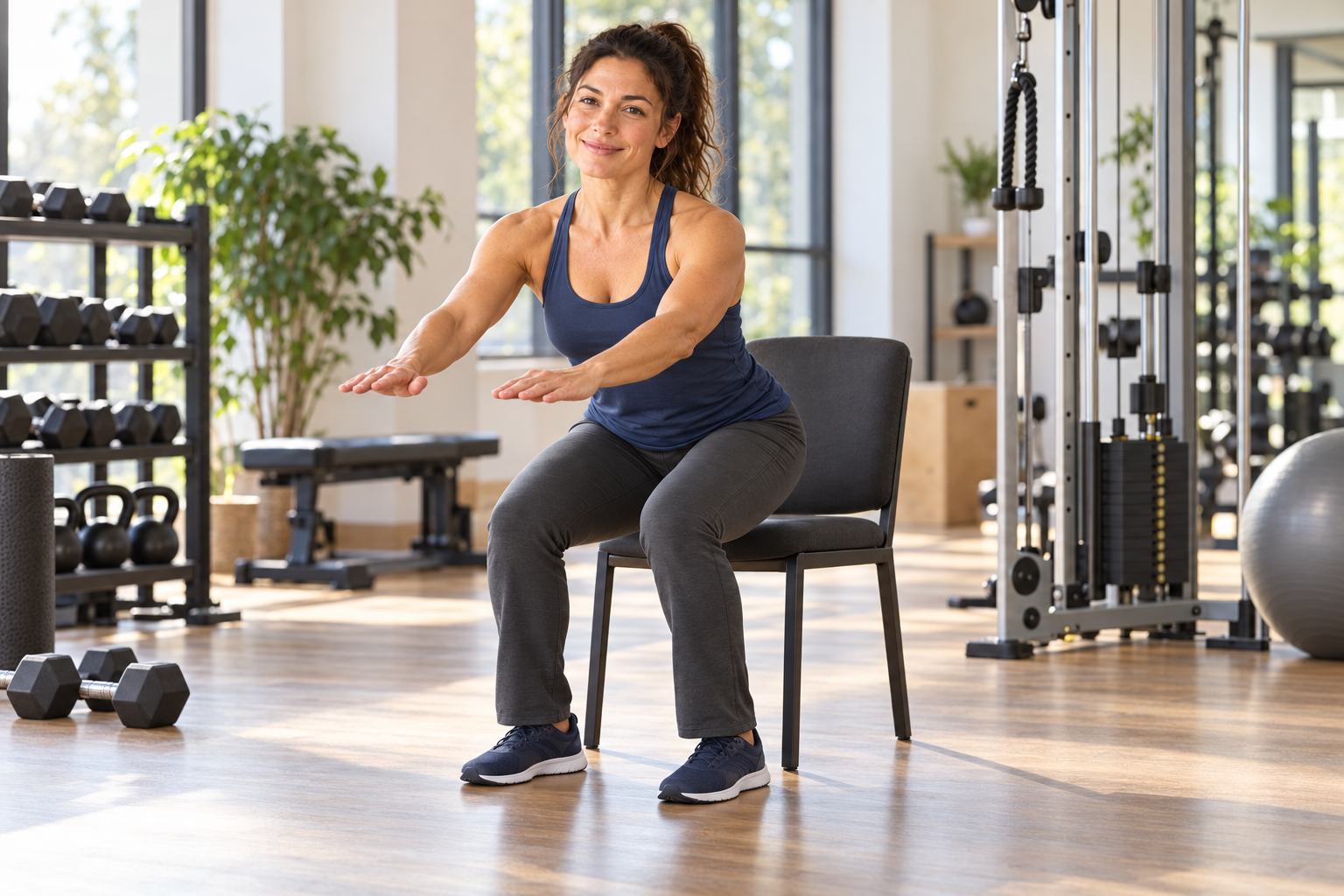
Start with a version you can control. That might mean a chair squat rather than a deep squat, a wall push rather than a floor push, or a light band row. Your starting point is allowed to look different from someone else’s.
The general adult guideline is muscle-strengthening activity on at least two days each week, but that is a public-health target, not a demand to begin at full volume. Two short sessions are enough to create a routine. Add more only when the current amount feels repeatable.
Should I train differently during my menstrual cycle?
There is no reliable universal calendar that tells every woman to lift more in one phase and less in another. Reviews have found inconsistent methods and small studies, and an umbrella review concluded that it is premature to say short-term cycle changes meaningfully alter strength or long-term resistance-training adaptations for everyone.
That does not mean symptoms are imaginary. Pain, fatigue, sleep disruption and mood can affect how a session feels. Use your experience as information without turning it into a rigid phase-based programme.
On a difficult day, you might keep the exercise but use less resistance, do fewer sets, take longer rests, choose a simpler variation, or move the session. On a good day, you do not need to hold back because a calendar says you are in the “wrong” phase. Train by readiness and symptoms, not by a promise that the cycle can predict your performance.
If bleeding, pain, fatigue or cycle changes are severe, new or worrying, speak with a qualified clinician. Strength training is not a treatment for a menstrual or reproductive-health condition.
What about perimenopause and menopause?
Strength training remains useful in midlife, but it should not be presented as a cure for menopause symptoms. Official guidance highlights physical activity and maintaining muscle strength, while menopause care still belongs with a healthcare professional when symptoms need assessment or treatment.
The practical starting point is simple: use a load you can control, leave room for recovery and progress gradually. Weight-bearing and resistance exercise can be part of a broader approach to bone and muscle health. It does not replace clinical advice, screening or treatment.
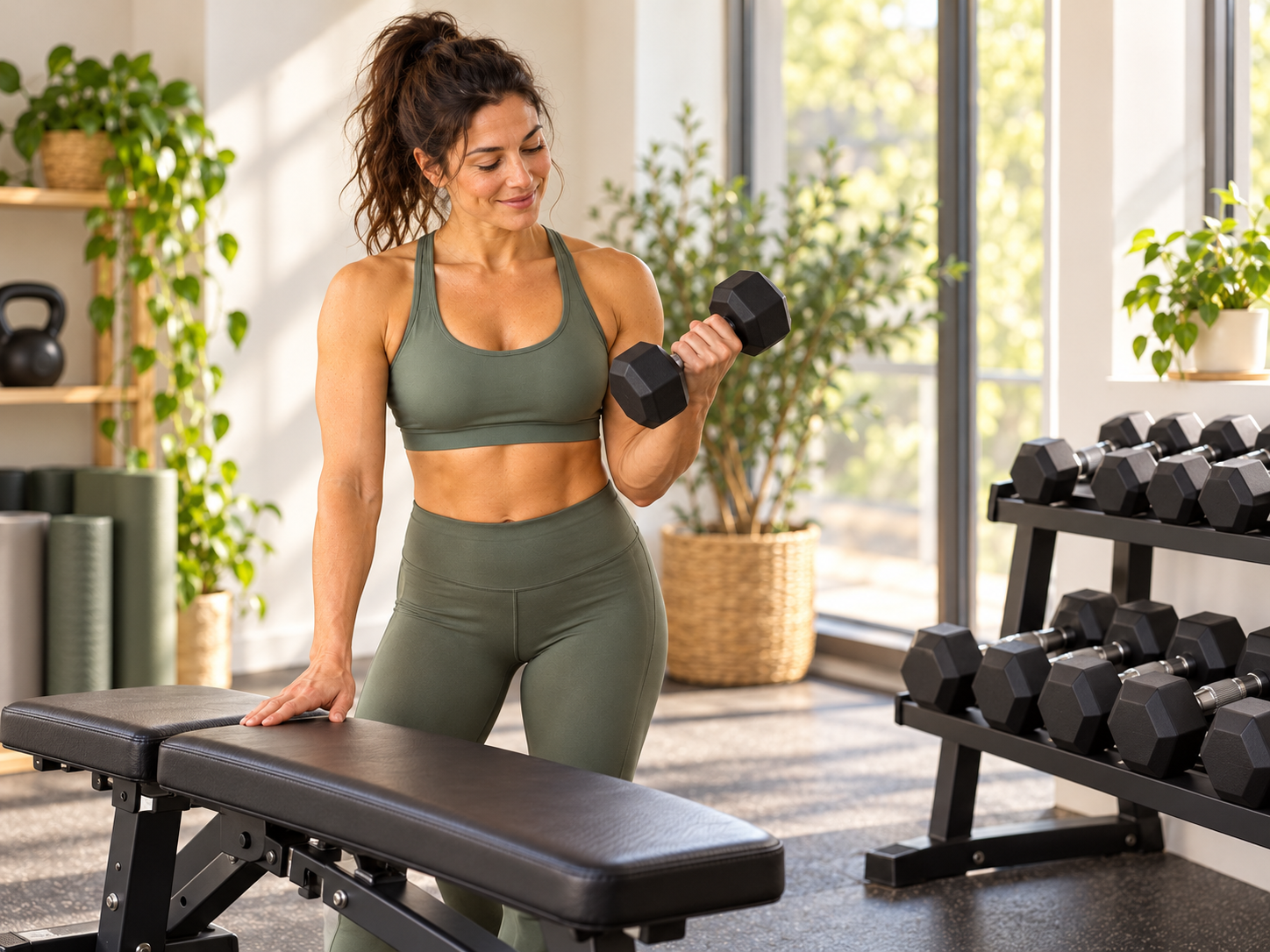
How can I feel less uncomfortable in the gym?
You do not have to earn your place. A gym is a room with equipment, not a test of whether you look like you belong there.
Try making the first visit deliberately small:
- Go at a quieter time and identify two or three stations.
- Bring a short plan with three movements you already understand.
- Start with a light load and stop while your form is controlled.
- Ask staff to show you how a machine adjusts; that is a normal use of the gym.
- Leave with one thing you learned, not a score for how you looked.
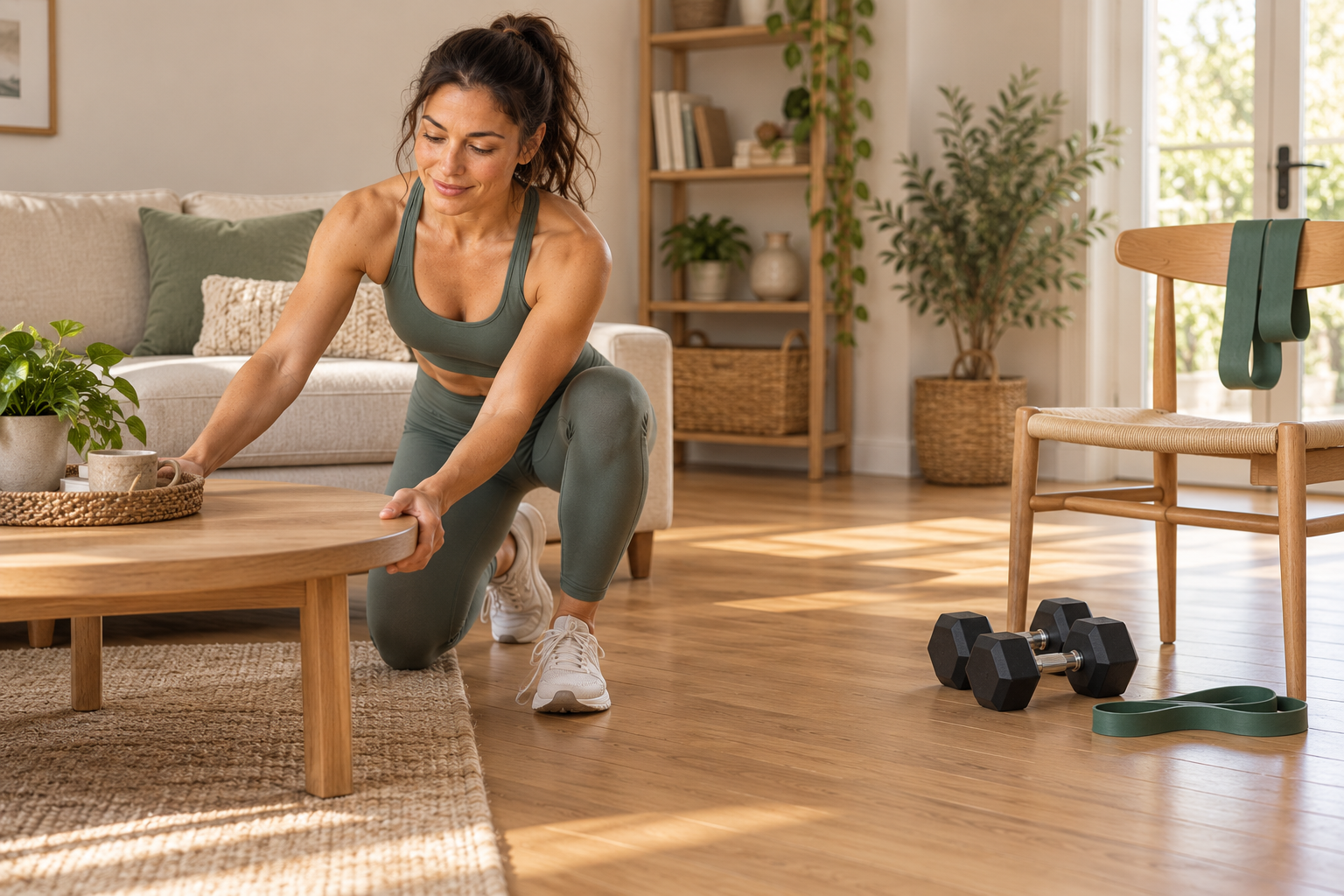
Home training is also a legitimate place to start. The best setting is the one where you can practise consistently and safely.
A calm way to begin
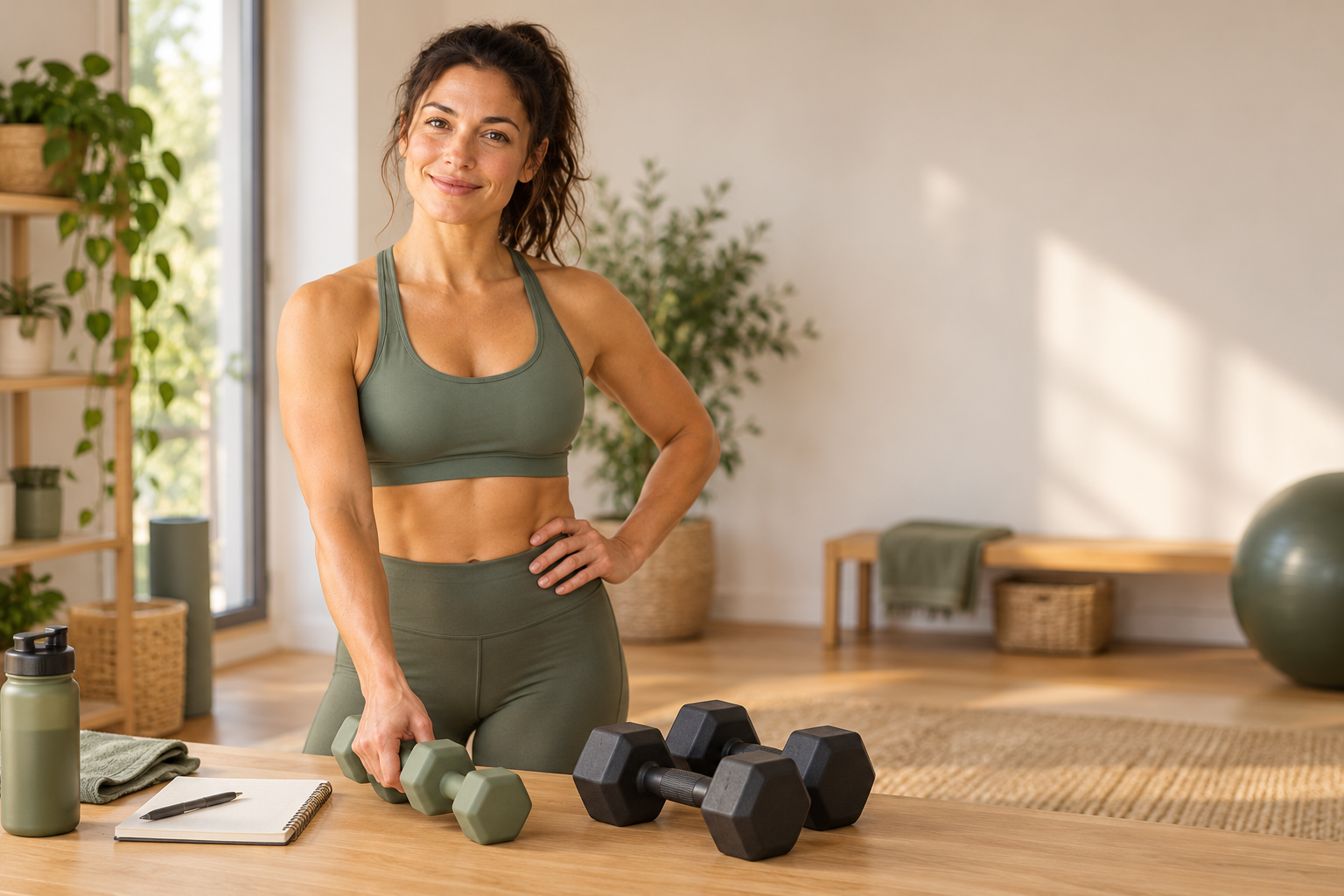
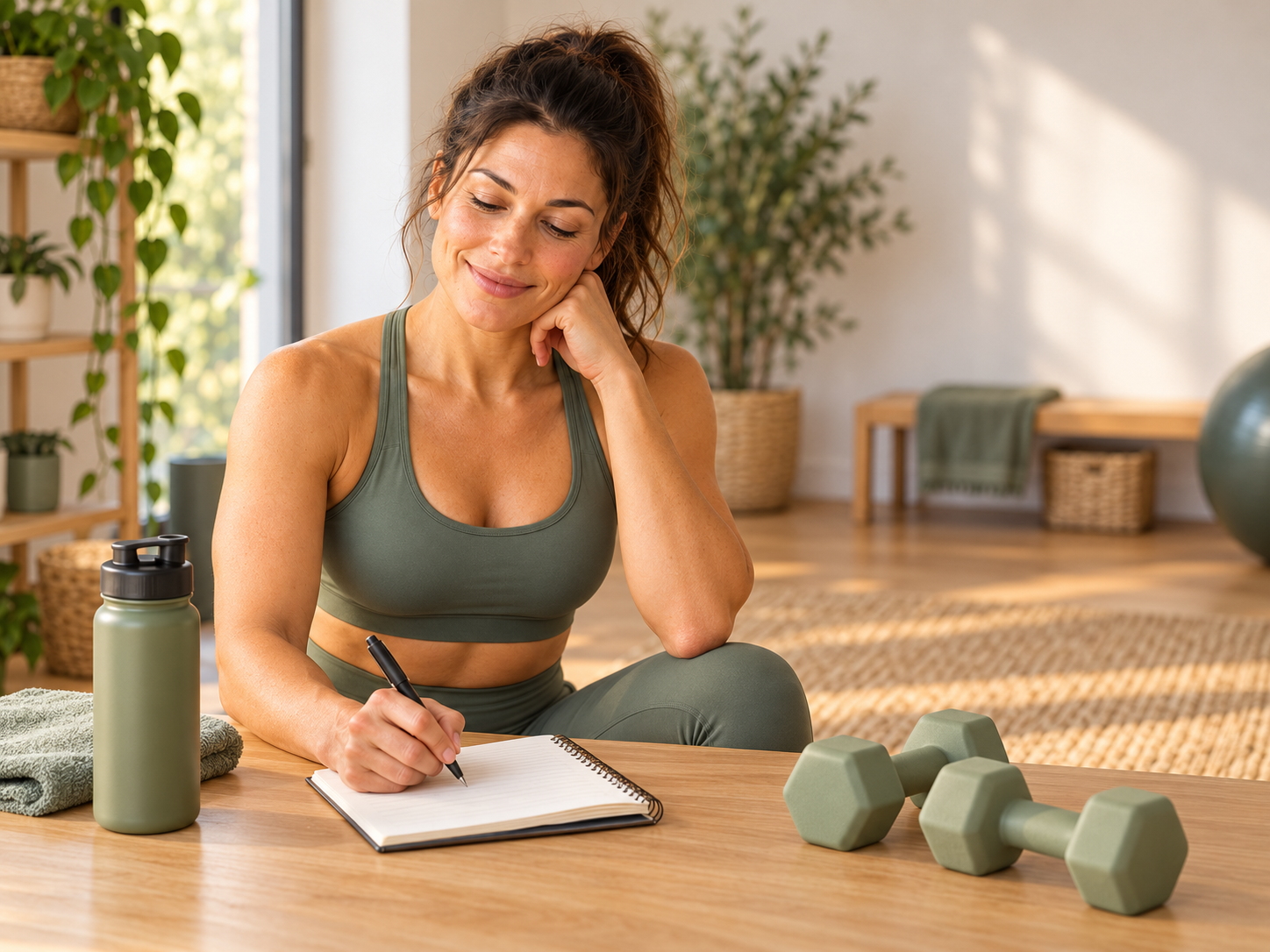
For the first few weeks, choose two non-consecutive days. Use three to five simple movements, one or two comfortable sets each, and stop with a little energy left. Write down the exercise, the resistance and how it felt.
When the same session becomes familiar, progress one variable: a few more controlled repetitions, a small increase in resistance, or a slightly harder variation. You do not need to change everything at once.
When to pause and get help
Stop and seek medical advice for chest pain, fainting, severe shortness of breath, a new neurological symptom or an injury that is worsening. Pregnancy, postpartum recovery, pelvic-floor symptoms and significant medical conditions deserve individual guidance rather than a generic online plan.
Sources
- U.S. Department of Health and Human Services. Physical Activity Guidelines for Americans, 2nd edition. 2018.
- Colenso-Semple LM, D'Souza AC, Elliott-Sale KJ, Phillips SM. Frontiers in Sports and Active Living. Current evidence shows no influence of women's menstrual cycle phase on acute strength performance or adaptations to resistance exercise training. 2023.
- Thompson B, Almarjawi A, Sculley D, Janse de Jonge X. Sports Medicine. The Effect of the Menstrual Cycle and Oral Contraceptives on Acute Responses and Chronic Adaptations to Resistance Training. 2020.
- National Institute for Health and Care Excellence. Menopause: identification and management. amended 2024.
- Office on Women's Health. How to be active for health. accessed 2026.
This article is for general information and isn’t a substitute for personal medical advice. If you have health concerns, speak to a qualified professional.